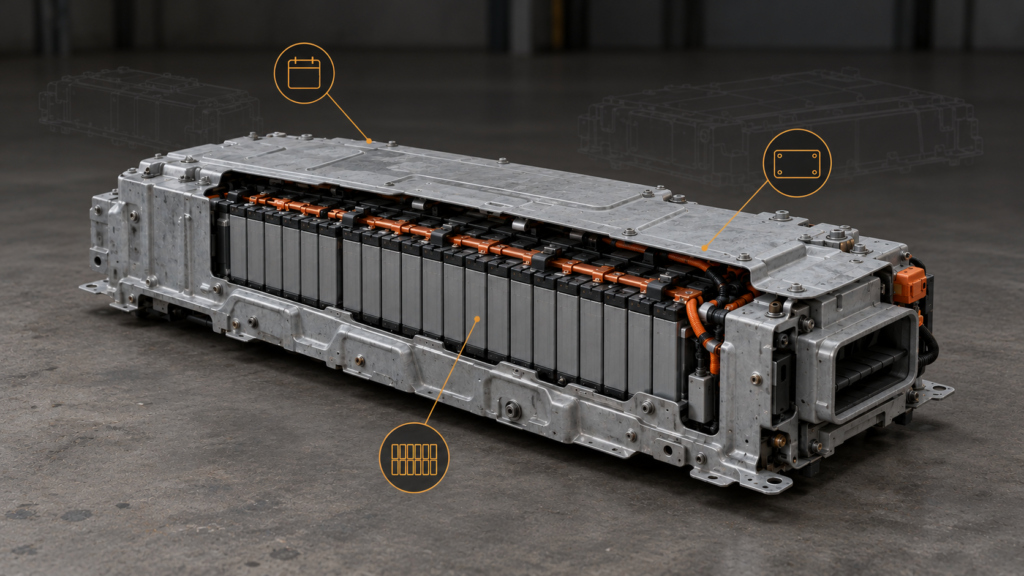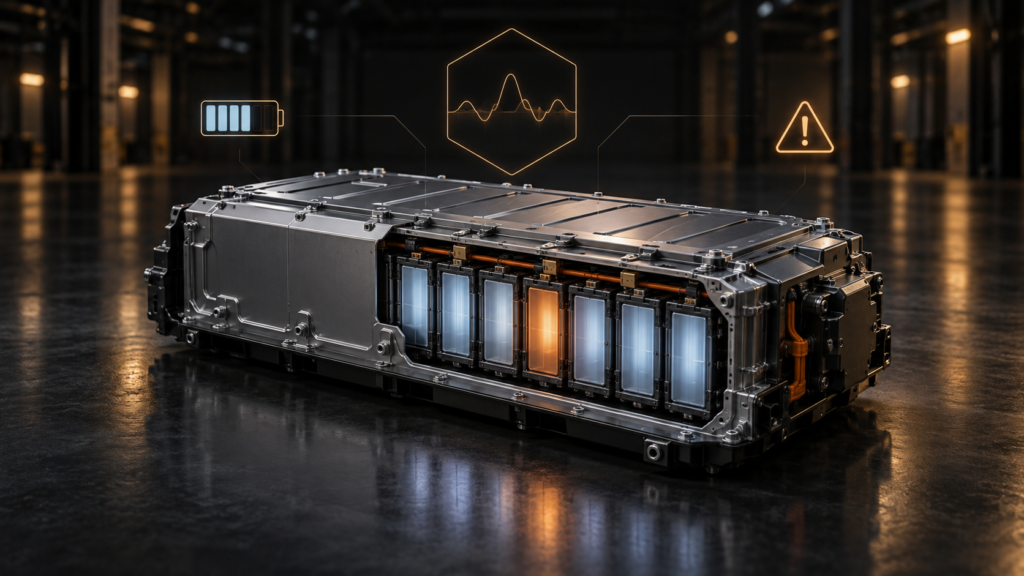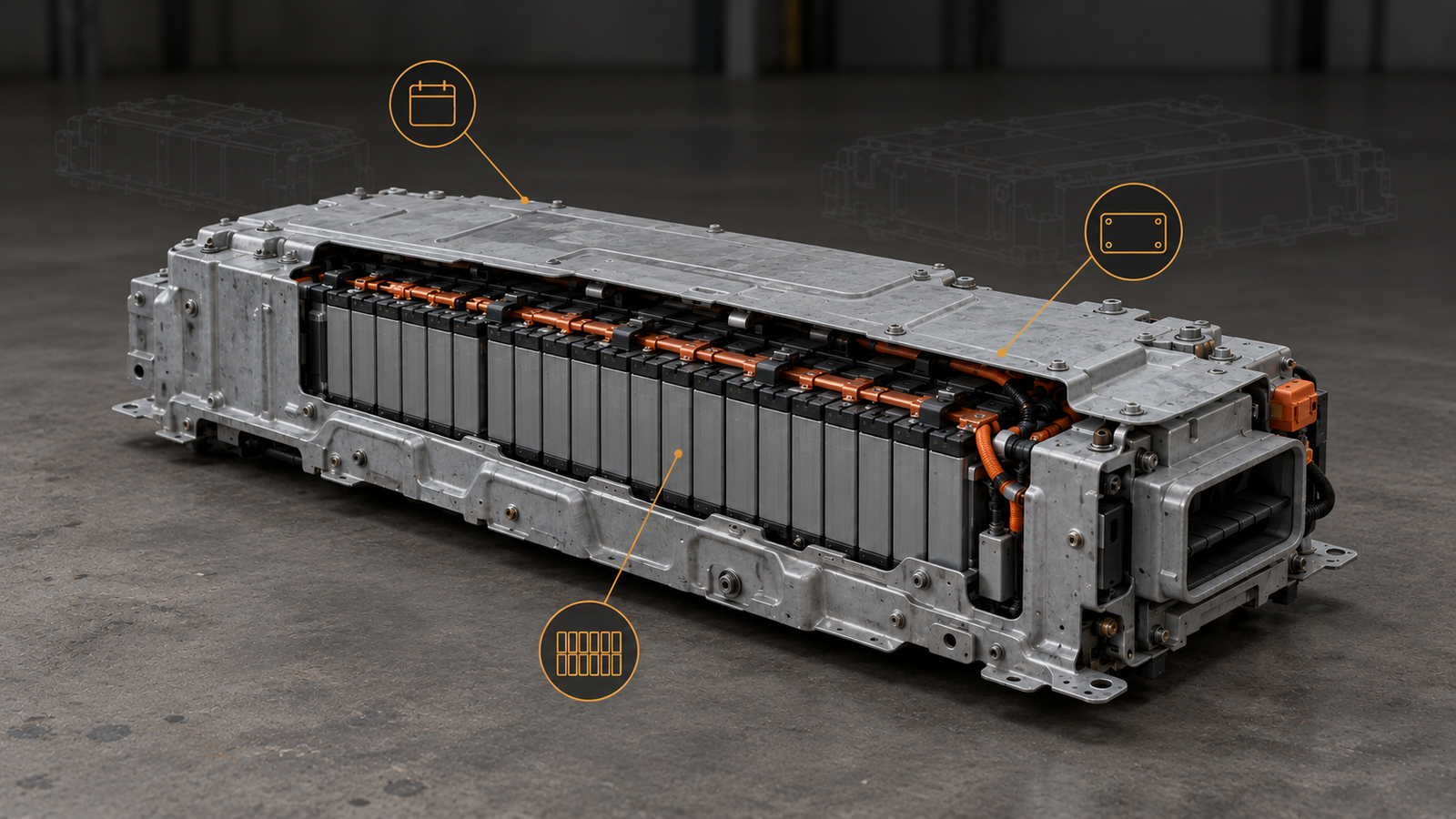

Introduction: Identifying the correct Toyota Prius generation is the first step when researching a replacement hybrid battery. A Prius may look familiar from the outside, yet its model year, chassis series, market origin, and battery design can differ. A careful check prevents compatibility errors, delayed repairs, and incorrect stock requests. This matters even more for workshops, distributors, importers, resellers, and fleet teams ordering batteries in volume.
Key Takeaways
- Confirm the model year, chassis code, and vehicle identification details.
- Do not identify a Prius generation from body shape alone.
- Registration year and production year may not always match.
- Battery casing, connectors, voltage needs, and pack layout can differ.
- Send clear vehicle and battery label photos when requesting stock.
- Workshops should record generation data before removing the old pack.
- Bulk buyers need generation-specific stock records for repeat orders.
Why does the Toyota Prius generation matter?
The generation matters because it helps define which traction battery design belongs in the vehicle. Two Prius cars with similar names may require different pack configurations, connectors, control parts, or installation procedures.
Toyota has developed the Prius through several generations. The Toyota USA Newsroom describes the model’s long development history and its role in the growth of hybrid vehicles. That history has created a wide mix of vehicles in workshops, used-car markets, and export channels.
Generation matching is therefore more than a naming exercise. It gives a supplier the information needed to check suitable stock. It also helps a technician avoid opening, moving, or fitting a pack that was intended for another vehicle series.
The issue becomes more important when dealing with imported vehicles. The first registration date in the UAE or another destination market may be later than the actual production date. A listing, invoice, or registration card can also use broad terms that do not fully identify the vehicle series.
What are the common Toyota Prius generations?
- 1First generation2001–2003
- 2Second generation2004–2009
- 3Third generation2010–2015
- 4Fourth generation2016–2022
- 5Fifth generation2023–present
Buyers often use generation names such as Gen 2, Gen 3, or Gen 4. These terms help with an initial search, but a parts request needs more detail. Market, body version, and production timing can affect the final match.
What does this Prius generation guide show?
This table shows the broad model-year ranges commonly used to separate the main Prius generations. It is a screening guide, not a substitute for checking the vehicle plate, documents, and existing pack.
| Common generation name | Broad model-year range | Useful identification clue | What a buyer should confirm |
|---|---|---|---|
| First generation | Early Prius production through the early 2000s | Early sedan-style Prius design | Exact production details and source market |
| Second generation | Commonly associated with 2004-2009 models | Distinct liftback body and early widespread export presence | Chassis details, pack label, and connector arrangement |
| Third generation | Commonly associated with 2010-2015 models | Later liftback design with several market versions | Model series, voltage requirement, and battery label |
| Fourth generation | Commonly associated with 2016-2022 models | Sharper body design and newer platform | Powertrain version, market origin, and pack type |
| Fifth generation | Commonly associated with 2023 onward | Latest body and powertrain family | Full vehicle data before any parts request |
For an independent view of model-year groupings, the Cars.com Prius model history separates the car into its main generations. Regional launch timing and imported-vehicle records can still vary, so buyers should treat year ranges as an initial filter.
There are also several body and powertrain variations across Prius models. A Prius liftback, Prius c, Prius v, and plug-in version should not be grouped together only because each vehicle carries the Prius name.
How can you identify the generation from the model year?
Start with the production year shown on the vehicle data plate or reliable vehicle documents. Then compare that year with the usual generation range and confirm it through the chassis or model code.
A vehicle produced near a generation change needs extra care. For example, a late registration does not prove that the car belongs to the later generation. Likewise, an early registration in one market may differ from the model-year description used elsewhere.
Can the exterior shape confirm the generation?
The body shape can narrow the search, but it should not serve as final proof. Repairs, replacement panels, badges, and market-specific styling can make visual checks less reliable.
Use photos as supporting evidence. A front, rear, side, dashboard, and engine-bay photo can help a supplier understand the vehicle. However, those images should accompany the identification plate and existing battery details.
Where should you look for vehicle identification details?
Check the vehicle data plate, registration documents, and visible vehicle identification number locations. The exact placement can vary, so use the records available for that car and make sure each record refers to the same vehicle.
Write down the full model description rather than copying only part of it. A missing letter or number can remove useful information. Workshops should also keep a photo in the job file, especially when the car will remain on-site while stock is checked.
What information should you collect before requesting a Prius battery?
Collect the model year, generation, chassis or model code, market origin, required quantity, and voltage requirement. Clear photos of the vehicle plate and existing pack label make the request easier to review.
A strong request gives the supplier enough detail to check inventory without guessing. This reduces back-and-forth messages and helps commercial buyers receive a clear quotation faster.
Which details should appear in a stock request?
This table lists the details that help a supplier review generation and battery compatibility. It also explains why each item matters during a wholesale inquiry.
| Information to provide | Why it matters | Recommended format |
|---|---|---|
| Vehicle model | Separates the standard Prius from other Prius body versions | Full name from the vehicle documents |
| Production or model year | Provides the first generation filter | Year plus a photo of supporting records |
| Chassis or model code | Helps narrow the vehicle series | Complete code without shortened characters |
| Market origin | Helps explain imported specification differences | Country or market stated in reliable records |
| Existing pack label | Provides pack-specific reference information | Clear, well-lit photo with readable text |
| Connector and casing photos | Supports a visual comparison before dispatch | Several sharp photos from safe angles |
| Quantity required | Allows the supplier to review bulk stock | Exact unit count and repeat-order forecast |
| Voltage requirement | Supports the technical stock check | Requirement supplied by a qualified technician |
Commercial buyers should use one consistent request format across all branches and technicians. That approach makes it easier to compare quotations, track stock, and repeat an order later.
Why should you check the existing battery label?
The existing battery label gives pack-specific information that the vehicle’s exterior cannot show. When safe access is possible, a clear label photo can support the model and generation check.
Only trained personnel should inspect or handle a high-voltage traction pack. If the pack remains installed, do not remove covers or touch high-voltage parts merely to take a photo. Use accessible labels and established workshop safety procedures.
The label should be read as supporting evidence, not as the only evidence. A used vehicle may have received a previous replacement. As a result, the installed pack may not tell the full story of the car’s original specification.
Do battery casing and connectors matter?
Yes. Casing shape, mounting points, connector layout, and related control parts can affect compatibility. A pack that looks close may still be unsuitable for the vehicle.
Ask a technician to document the old unit before removal. Photos should show the full casing, accessible connectors, labels, vents, and mounting areas. Keep those images under the vehicle’s job number so they do not become mixed with another repair.
If internal inspection is required, trained staff should assess the pack and its battery cells. External appearance alone does not show electrical condition, and individual components should not be treated as interchangeable without a proper technical check.
How is a Gen 3 Prius different when ordering a replacement?
A third-generation request should clearly state the vehicle year, model series, and pack information. Asking only for a Prius battery leaves too much room for error.
Toyota introduced the third-generation Prius as a new vehicle generation rather than a minor update. The Toyota third-generation Prius announcement provides relevant background on that launch.
For stock inquiries, write Gen 3 Prius hybrid battery only as the opening description. Follow it with the full vehicle data. This is especially useful for a distributor sending several requests at once.
Clear naming also helps separate Toyota Prius models from other Toyota hybrids. A battery request for a Prius should not be combined with an Aqua, Yaris, Camry, or Lexus request unless each line includes its own identification details.
What mistakes cause Prius battery compatibility problems?
The most common mistake is relying on one clue, such as body shape or registration year. Compatibility checks should combine vehicle records, model codes, pack information, and technical requirements.
- Using only the registration year: The registration date may not match the production period.
- Sending a cropped plate photo: Missing characters can prevent an accurate stock check.
- Assuming every Prius uses the same pack: Generations and body variants can differ.
- Ignoring market origin: Imported vehicles may need closer document review.
- Ordering by appearance: A similar casing does not confirm technical suitability.
- Mixing vehicle records: Photos and codes from two jobs can lead to the wrong request.
- Leaving out quantity: Wholesale availability depends on the required unit count.
Another error is using broad online descriptions for different Toyota Prius models without confirming the exact car. Search terms are useful for research, but they are not purchase specifications.
How should workshops record Prius generation details?
Workshops should create a short intake record before diagnosis or pack removal. The record should connect the vehicle identity, fault assessment, battery photos, and stock request under one job number.
- Record the full vehicle name and year from reliable documents.
- Photograph the identification plate and save the original image.
- Note the chassis or model code exactly as shown.
- Record the source market if reliable records provide it.
- Ask a qualified technician to confirm the voltage requirement.
- Photograph accessible battery labels and casing details safely.
- State whether the request is for one unit or a bulk order.
- Keep the supplier’s stock confirmation with the repair record.
This process is useful for fleet teams as well. A fleet may contain cars from more than one production period, even when the vehicles share similar paint, trim, and registration dates. Separate records reduce repeat mistakes.
How do wholesale buyers manage generation-specific inventory?
Wholesale buyers should sort inventory by vehicle series, generation, technical requirement, and verified pack reference. Broad labels such as “Prius battery” are not detailed enough for dependable repeat supply.
A distributor can add a simple status field for each unit: received, inspected, tested, reserved, collected, or shipped. That record supports clear communication between sales, warehouse, and workshop teams.
Demand history also matters. Buyers can review which Prius generations move most often, then compare that demand with current tested stock. The article on why Prius battery stock stays in high demand gives further commercial context for inventory planning.
For larger orders, request stock by line item. Each line should show the model series, generation, quantity, voltage requirement, and any supporting reference. This format makes substitutions clear if the requested configuration is not available.
What should you check beyond generation matching?
Generation matching confirms the vehicle family, but buyers must also review condition, testing, source, quantity, and fulfillment terms. A correct generation label does not prove that a used pack is ready for commercial use.
Hybrid Hive sources used batteries through trusted partners in Japan, including dismantlers and dealership-related or certified supply channels. Batteries entering its UAE supply network are dual-inspected, voltage-tested, checked for good condition, stored for business demand, and prepared for warehouse pickup or international shipment.
The business reports more than 20,000 batteries supplied or processed and a 4.9 positive review signal. These points help commercial buyers assess operating history and customer confidence without replacing their own order checks.
Businesses should still ask what information is needed for stock confirmation, how the quotation is presented, and whether an alternative can be suggested if the first request is unavailable. They should also confirm collection or shipping arrangements before payment.
Does battery age alone show remaining condition?
No. Age provides useful context, but it does not replace inspection and electrical testing. Vehicle use, storage, previous work, and pack condition can affect the assessment.
Buyers researching service expectations can read this guide to Prius traction battery life. For an actual purchase, the supplier and technician should focus on the specific unit being offered rather than a general lifespan estimate.
How does the Hybrid Hive request process work?
The process starts when a business sends the vehicle model, generation, quantity, and voltage requirement. Hybrid Hive then checks UAE stock, confirms availability, and prepares a transparent quotation.
If the requested option is not available, the team may suggest a relevant alternative for review. No substitution should be accepted until the buyer confirms that it fits the vehicle and technical need.
After payment confirmation, the order can be prepared for collection from the Sharjah warehouse or for shipment. International support is relevant for importers and distributors, while local workshops may prefer warehouse pickup and an on-site test where arranged.
This structured process suits parts distributors, automotive workshops, importers, resellers, and fleet maintenance teams. It also supports repeat purchasing because buyers can reuse accurate vehicle records when the same series returns.
Summary
To identify a Toyota Prius battery generation, begin with the production year and then verify the chassis or model code, market details, and existing pack label. Do not depend on body shape, advertisement text, or registration year alone.
Commercial buyers should send full vehicle details, clear photos, voltage needs, and quantity requirements. That information gives a supplier a sound basis for reviewing stock and preparing a quotation.
Hybrid Hive supports B2B buyers from Sharjah with tested, good-condition used inventory sourced through trusted Japanese channels. Workshops, distributors, importers, resellers, and fleet teams can request a compatible hybrid car battery for warehouse pickup or supported shipment. Accurate generation data keeps that process clear, fast, and easier to repeat.
Frequently Asked Questions
Find answers to common questions about our hybrid battery supply, ordering process, and delivery options.
The model year is a useful starting point, but it should not be the only check. Registration dates, production timing, and imported-vehicle records can differ. Confirm the year with the vehicle identification details, chassis or model code, market origin, and an accessible photo of the existing battery label before requesting stock.
No. A shared generation name does not automatically prove that every pack is interchangeable. Body version, market specification, connector layout, casing, control parts, and voltage needs may differ. A supplier should review the complete vehicle and pack information, while a qualified technician should confirm suitability before installation.
Send clear photos of the vehicle data plate, relevant documents, accessible battery label, full battery casing, and visible connectors. Include front, rear, and side vehicle images if the exact body version is unclear. Do not open high-voltage covers or touch traction battery parts merely to obtain a photograph.
The chassis or model code helps narrow the request beyond the broad Prius name and model year. It reduces confusion between generations, body versions, and imported specifications. For bulk orders, complete codes also help the warehouse separate stock lines, prepare quotations, and keep repeat-order records consistent across several vehicles.
Yes. Hybrid Hive is structured for commercial buyers such as workshops, distributors, importers, resellers, and fleet maintenance teams. Buyers should submit the vehicle model, generation, quantity, and voltage requirement. Stock is then checked, availability is confirmed, and a quotation is prepared for warehouse collection or supported international shipment after payment confirmation.