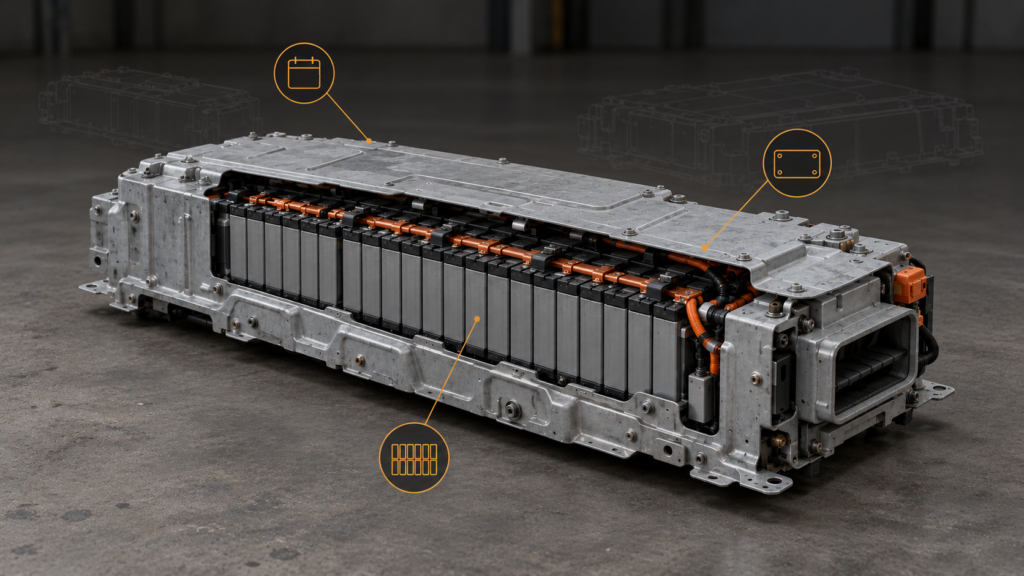
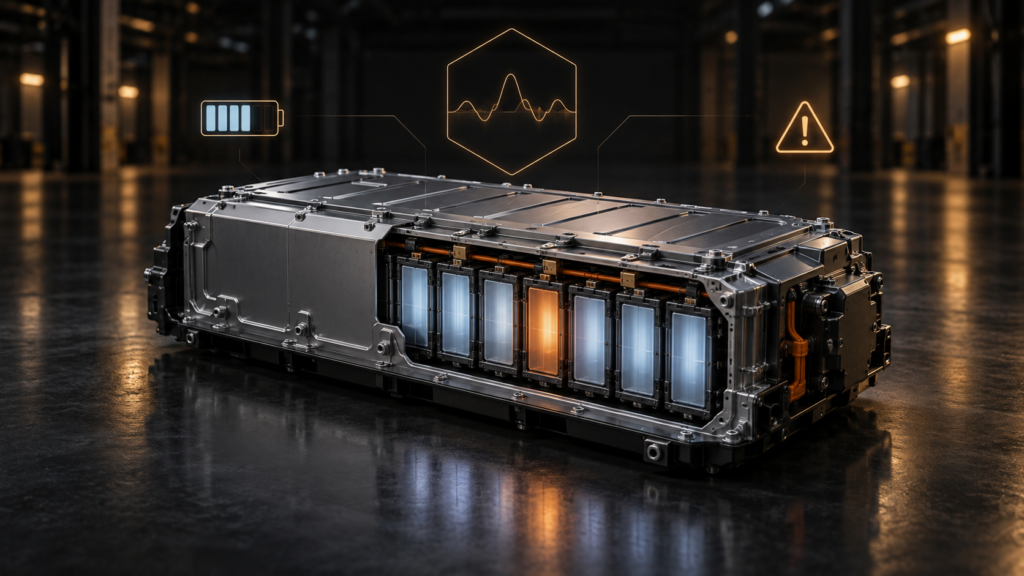
Introduction: Choosing the right hybrid battery starts with one basic fact: not all hybrid systems work in the same way. Nickel-metal hydride, lithium-ion, and 48V systems differ in chemistry, voltage, size, power role, and vehicle compatibility. Whether you own one car or purchase parts for a workshop, fleet, or distribution business, you need to identify the exact system before sourcing a replacement.
Key Takeaways
- NiMH and lithium-ion packs can both support full-hybrid vehicles.
- A 48V system usually supports a mild hybrid, not electric-only driving.
- Full hybrids, plug-in hybrids, and mild hybrids need different battery systems.
- Chemistry alone does not confirm that a replacement pack will fit.
- Model, generation, voltage, connectors, and pack layout all matter.
- Tested used packs can support repair, resale, fleet, and export needs.
- Always confirm compatibility before paying for a replacement.
What are the main types of hybrid vehicle batteries?
The three common categories are nickel-metal hydride, lithium-ion, and 48V mild-hybrid systems. The first two describe battery chemistry, while 48V mainly describes the system voltage and vehicle architecture.
A nickel-metal hydride battery, often called NiMH, has a long history in full-hybrid cars. It appears in many established Toyota and Lexus hybrid applications, although the exact chemistry depends on the model, generation, and market.
A lithium-ion hybrid battery uses lithium-based chemistry. Vehicle makers use this type in various full hybrids and plug-in hybrids. Lithium-ion technology can store energy in a smaller and lighter pack, but that does not make it interchangeable with an NiMH pack.
A 48V mild hybrid battery supports a mild-hybrid system. It assists the engine and powers related electrical functions, but it does not normally perform the same role as the high-voltage traction pack in a full hybrid or plug-in hybrid.
According to the Alternative Fuels Data Center, electric-drive vehicles use traction battery packs to store electricity for the electric motor. Battery type, pack design, and energy needs vary by vehicle architecture. That is why the vehicle identity matters as much as the chemistry name.
What does NiMH mean in a hybrid car?
NiMH means nickel-metal hydride. In a hybrid car, the NiMH pack stores recovered electrical energy and supplies power to the vehicle’s electric drive system when required.
NiMH systems have been used across several well-known hybrid generations. For parts buyers, their long market presence can make demand easier to understand. However, a familiar model name is not enough to confirm a match. One model may use different pack designs across production years or regional versions.
Inside a pack, individual modules contain battery cells. The complete assembly also includes electrical connections, structural parts, monitoring components, and cooling features. A defect in one part of that assembly may affect pack performance, so checking only the outer case tells you very little.
What does lithium-ion mean in a hybrid car?
Lithium-ion refers to a family of rechargeable battery chemistries used in many modern electrified vehicles. These packs can serve full-hybrid or plug-in hybrid systems, depending on their capacity and design.
Lithium-ion packs often differ from NiMH packs in shape, cooling needs, control software, electrical layout, and internal construction. Even two lithium-ion packs with similar stated voltages may not share the same connectors, mounting points, communication setup, or physical dimensions.
Never treat chemistry as a complete part number. A buyer should still verify the model, generation, production period, market version, voltage requirement, and pack reference. If any detail is unclear, ask the supplier to confirm the exact stock against the vehicle information.
How do NiMH, lithium-ion, and 48V systems compare?
NiMH and lithium-ion can act as high-voltage traction storage in full hybrids, while a 48V system usually provides engine assistance in a mild hybrid. Their roles, replacement needs, and safety requirements are therefore different.
Comparison of common hybrid battery systems
| System type | Main role | Common vehicle architecture | Key sourcing check |
|---|---|---|---|
| Nickel-metal hydride | Stores energy for electric assistance and hybrid driving functions | Full hybrid | Confirm model, generation, pack design, and voltage |
| Lithium-ion | Stores traction energy for electric assistance or extended electric operation | Full hybrid or plug-in hybrid | Confirm chemistry, capacity, connectors, software compatibility, and pack reference |
| 48V system | Assists the engine and supports electrical functions | Mild hybrid | Confirm that the vehicle uses the same 48V architecture and component type |
This comparison shows why labels can cause confusion. “Lithium-ion” names a chemistry, while “48V” names a voltage class. A 48V pack may use lithium-ion chemistry, yet it still belongs to a different system category from the larger traction pack in many full hybrids.
The term automotive batteries also covers more than one product. A vehicle may contain a conventional low-voltage starter or auxiliary battery, a 48V pack, or a high-voltage traction pack. Some vehicles contain more than one of these at the same time.
- Stores energy for the electric drive system
- Works with hybrid driving and energy recovery
- Usually the battery people mean when they ask for a hybrid pack
- May be NiMH or lithium-ion depending on the vehicle
- Powers control systems, accessories, and startup functions
- Helps the vehicle wake up before the traction system engages
- Does not replace the high-voltage traction battery role
- Should be requested separately from the main hybrid pack
What is the difference between full, plug-in, and mild hybrids?
A full hybrid can use electric power for some driving tasks, a plug-in hybrid has a larger rechargeable traction pack that can receive power from an external source, and a mild hybrid mainly uses electrical assistance to support the engine.
How does a full-hybrid system work?
A full hybrid combines an internal combustion engine with an electric drive system. Its control system can use engine power, electric power, or both, based on the vehicle design and driving conditions.
The traction pack receives energy through the vehicle’s charging strategy, including energy recovered during deceleration. The driver does not usually connect a standard full hybrid to an external charger. Toyota Prius, Toyota Aqua or Yaris, Toyota Camry Hybrid, and Lexus RX Hybrid are important models in the used parts trade, though their battery details vary by generation.
How regenerative braking refills the battery
A standard full hybrid usually does not plug in. Instead, part of its battery charge is recovered while the vehicle slows down.
Demand also varies by model and export market. Buyers who handle Toyota stock may find the guide to Toyota Aqua battery demand in export markets useful when planning inventory.
How is a plug-in hybrid different?
A plug-in hybrid has a traction battery that can charge from an external electricity source. It generally supports more electric operation than a non-plug-in full hybrid, but exact capability depends on the vehicle.
Its larger energy requirement affects pack size, weight, controls, cooling, and replacement logistics. A pack taken from a standard hybrid version of a model should not be assumed to fit the plug-in version. Similar body styling can hide major differences beneath the floor or rear storage area.
The US Environmental Protection Agency tracks vehicle technology trends, including the growing use of electrified powertrains. For a replacement buyer, the practical lesson is simple: identify the powertrain version, not just the make and body name.
What is a mild-hybrid vehicle?
A mild-hybrid vehicle uses a smaller electrical system to assist the engine. It does not operate like a full hybrid and should not be treated as one during diagnosis or parts sourcing.
A mild hybrid battery may support smoother restarting, energy recovery, engine assistance, and vehicle electrical loads. The exact functions depend on the manufacturer and model. The system still relies on the combustion engine as its main source of propulsion.
This distinction matters when a customer asks for a “hybrid pack” without more detail. A supplier needs to know whether the request concerns a 48V component, a high-voltage full-hybrid traction pack, a plug-in pack, or a separate low-voltage battery.
Why does exact battery compatibility matter?
Exact compatibility matters because the wrong pack may not mount, connect, communicate, cool, charge, or operate correctly. Matching voltage alone does not prove that a replacement is suitable.
Start with the full vehicle identity. Record the make, model, model year, generation, engine or powertrain version, chassis details where available, and destination market. Then record the current pack reference, chemistry, voltage requirement, connector layout, and visible configuration.
For example, two Toyota models may both use NiMH technology, but their module count, casing, cooling path, electrical connections, and control needs may differ. Even within one model family, a later generation may use a different pack or offer different chemistries.
Do not modify a pack merely because its voltage appears close to the required value. Hybrid traction systems involve dangerous voltage and should be handled by trained people with the correct tools and procedures.
Which details should you send to a supplier?
Send the vehicle model, generation, quantity, and required voltage first. Add the model year, market version, pack label, part reference, and clear photos when available.
A complete request saves time and reduces avoidable errors. For commercial orders, it also helps the supplier check whether all units can come from the same compatible stock group.
Compatibility details to confirm before ordering
| Detail | Why it matters | What to provide |
|---|---|---|
| Vehicle identity | Similar model names may cover different hybrid systems | Make, model, year, generation, and market |
| System type | Full, plug-in, and mild hybrids need different equipment | Exact powertrain version |
| Chemistry | NiMH and lithium-ion packs are not automatically interchangeable | Pack label or confirmed specification |
| Voltage | The electrical system must match the intended pack | Required pack voltage or original reference |
| Physical layout | Mounts, casing, cooling, and connectors must fit | Part number and clear pack photos |
| Order quantity | Bulk stock checks depend on unit count | Current need and likely repeat volume |
What should you check when buying a used hybrid battery?
Check identity, condition, voltage test results, sourcing information, and stock consistency. For bulk purchases, also confirm quantity, collection or shipping arrangements, and how the supplier handles unavailable items.
A used pack should not be judged by appearance alone. Ask whether it has been inspected and voltage-tested. Confirm that the test relates to the actual unit or stock group being offered, rather than a broad statement about that model.
Hybrid Hive sources used batteries through trusted partners in Japan, including dismantlers and dealership-related or certified supply channels. Units enter its UAE supply network, where they are dual-inspected, voltage-tested, checked for good condition, and prepared for warehouse pickup or international shipment.
Commercial buyers can also review the company’s guide to sourcing, testing, and stock readiness for more detail on procurement checks.
Why does voltage testing matter?
Voltage testing helps confirm the electrical state of a pack or module at the time of inspection. It is useful, but it should sit within a wider condition and compatibility check.
A voltage figure cannot answer every question by itself. Buyers should ask what was tested, when it was tested, and whether the reading applies to the complete pack or selected components. Physical condition, pack identity, and fitment still need review.
For a repeat commercial order, consistency also matters. Workshops and distributors need stock that matches the requested application across the agreed quantity. A clear request and documented stock confirmation reduce delays after the order reaches the warehouse.
Can a used battery support sustainable vehicle repair?
Yes. Reusing a suitable tested component can extend its useful service life and keep an existing hybrid vehicle in operation, provided the part is safe, compatible, and in good condition.
Second-life supply connects performance with practical reuse. It can help workshops, fleets, importers, and resellers meet repair demand without treating every recoverable component as waste. Suitability must still come first. A reuse benefit does not justify fitting an unknown or mismatched pack.
How does wholesale hybrid battery sourcing work?
Wholesale sourcing starts with a detailed request, followed by stock confirmation, a quotation, payment, and collection or shipment. A clear process is vital when the order includes several units or multiple vehicle applications.
Hybrid Hive is based in Sharjah, UAE, and serves parts distributors, automotive workshops, importers, resellers, and fleet maintenance teams. Its inventory focus includes Toyota Prius, Toyota Aqua or Yaris, Toyota Camry, and Lexus RX Hybrid, with availability for other models subject to stock confirmation.
The company reports more than 20,000 batteries supplied or processed, more than 300 bulk orders supported, and a 4.9 positive review signal. These figures provide useful context for buyers assessing repeat-order capability and operational experience.
The normal request should state the model, generation, quantity, and voltage requirement. Hybrid Hive then checks stock, confirms availability, prepares a transparent quotation, and suggests alternatives if the requested item is unavailable. After payment confirmation, the order can be prepared for warehouse collection or international shipment.
For businesses seeking tested used automotive batteries, this process offers a clearer route than placing an incomplete request based only on a vehicle name.
What should a workshop or distributor ask before buying?
Ask for confirmed compatibility, available quantity, testing status, pack condition, quotation details, and the planned collection or shipping method. Repeat buyers should also discuss likely future volume.
- Is the stock for the exact model and generation?
- Does the chemistry match the original system?
- Has each unit or stock group been voltage-tested?
- How many compatible units are ready?
- Can the order be collected from the Sharjah warehouse?
- Is international shipment available for the destination?
- What alternative stock can be offered if the first choice is unavailable?
Keep written records of the quotation and stock confirmation. On larger mixed orders, list each application and quantity on a separate line. This makes packing and receiving checks easier for both sides.
How can you identify the right system without technical expertise?
Use the vehicle documents and the label on the existing pack, then send those details to a qualified workshop or supplier. Do not open a high-voltage pack to identify it yourself.
- Write down the make, model, year, and generation.
- Confirm whether the vehicle is full hybrid, plug-in hybrid, or mild hybrid.
- Photograph the existing battery label and visible connectors.
- Record any part number and stated voltage.
- Send the information with the required quantity.
- Wait for written compatibility and stock confirmation.
If the pack is still installed, let a trained technician access it. High-voltage components can remain dangerous even when the vehicle is switched off. Simple identification should never become an unsafe repair attempt.
Summary
NiMH, lithium-ion, and 48V systems are not three interchangeable versions of the same product. NiMH and lithium-ion describe chemistry, while 48V describes a system voltage commonly linked to mild hybrids. Full hybrids, plug-in hybrids, and mild hybrids also use electrical power in different ways.
Before sourcing a replacement, confirm the vehicle model, generation, powertrain type, chemistry, voltage, part reference, connectors, and pack layout. For commercial demand, add the quantity, collection plan, shipping destination, and likely repeat volume.
Hybrid Hive supports business buyers from its Sharjah supply base with tested used stock, transparent quotations, warehouse pickup, and international shipment support. Buyers seeking compatible packs or tested battery cells should submit complete vehicle and system details before requesting final stock confirmation.
Frequently Asked Questions
Find answers to common questions about our hybrid battery supply, ordering process, and delivery options.
Neither chemistry is automatically better for every vehicle. The correct choice is the chemistry and pack design specified for the exact model and generation. NiMH has a long record in many established hybrids, while lithium-ion appears in many newer full-hybrid and plug-in applications. Compatibility, condition, testing, and correct fit matter more than choosing a chemistry by name.
Do not assume that an NiMH pack can be replaced with a lithium-ion pack. The two may differ in voltage behavior, cooling, controls, connectors, casing, and mounting points. Use only a conversion or replacement method that the vehicle maker or a qualified specialist confirms for that exact vehicle. A similar size or stated voltage does not prove compatibility.
No. A 48V mild-hybrid system usually assists the combustion engine and supports functions such as restarting, energy recovery, and electrical loads. It does not normally provide the same electric driving role as a full-hybrid traction system. When requesting a replacement, state clearly that the vehicle is a 48V mild hybrid and provide its exact model details.
Provide the vehicle make, model, generation, model year, system type, required voltage, pack reference, and quantity. Add clear label photos when possible. For shipping, include the destination and any order timing needs. These details allow the supplier to check suitable stock, confirm availability, prepare a clear quotation, and suggest alternatives if the first requested item is unavailable.
Hybrid Hive states that its used packs are dual-inspected, voltage-tested, and checked for good condition before they are prepared for collection or shipment. Buyers should still confirm that the offered stock matches the required model, generation, chemistry, and voltage. Commercial customers may also ask what stock is ready, how the units will be packed, and whether warehouse testing can be arranged.