
Introduction: Voltage testing matters before shipment because a used hybrid battery must offer more than a clean outer case and the correct part reference. Business buyers need evidence that the unit has been checked before it enters their workshop, warehouse, or resale stock. For distributors, repair centres, importers, and fleet teams, this step can reduce avoidable fitment delays, customer complaints, and repeat handling. Buyers sourcing a reliable hybrid battery in bulk should therefore ask how voltage is checked, when the test takes place, and how the result supports the final condition decision.
Key Takeaways
- Voltage testing checks electrical condition before dispatch.
- A visual inspection alone cannot confirm electrical readiness.
- Consistent checks support safer and faster buying decisions.
- Clear model and voltage details help prevent order errors.
- Testing can reduce avoidable workshop delays and stock disputes.
- Business buyers should ask what was tested and recorded.
- Testing works best as part of a wider inspection process.
Why is voltage testing important before a used unit is shipped?
Voltage testing gives the supplier and buyer an electrical condition check before the unit leaves the warehouse. It helps confirm whether the product should move forward for sale, need more review, or be held back.
A used battery may look suitable from the outside. The casing may appear intact, the connectors may be present, and the model information may match the request. Yet those visual points do not show how the unit behaves electrically.
That is why voltage measurement forms a core part of used battery assessment. It adds a practical check between sourcing and dispatch. For a commercial buyer, this can mean fewer surprises when stock reaches a workshop or distribution point.
The value becomes even clearer with bulk orders. A single avoidable issue may take time to inspect, report, separate, and resolve. When several units arrive without a clear pre-shipment process, that workload can grow. Regular testing helps suppliers make more informed dispatch decisions before shipping costs and staff time have already been committed.
Voltage results should not stand alone, however. Hybrid Hive combines dual inspection, voltage testing, condition checks, and inventory preparation within its UAE supply process. This supports buyers who need tested stock rather than products selected only by appearance.
What can a voltage check tell a commercial buyer?
A voltage check can show whether a unit produces a measurable electrical reading at the point of inspection. It also gives the supplier a basis for spotting readings that call for closer review.
For B2B procurement teams, the main benefit is not a number without context. The benefit is a more structured condition decision. The result can support stock selection, order preparation, and communication before dispatch.
Can it confirm that the unit is ready for further assessment?
Yes. A voltage reading can help determine whether a used unit should continue through the inspection and order process.
If the result raises concern, the supplier can pause the item rather than send it without review. If the result supports the condition assessment, the unit can move to the next stage. This creates a useful control point before collection or shipment.
A proper hybrid battery test should also match the type of product being checked. Buyers should give the vehicle model, generation, quantity, and required voltage when requesting stock. Accurate request details help the supplier identify suitable inventory and avoid comparing unrelated units.
Does one voltage reading prove future service life?
No. One reading does not prove how long a used unit will remain in service. It records condition at a specific stage and should form part of a broader review.
Used products have a prior service history. Their future performance may also depend on the vehicle, installation, operating conditions, and maintenance. For that reason, responsible supply language should not turn one test result into an unsupported lifespan promise.
Instead, buyers should treat voltage testing as evidence of a defined pre-shipment check. It offers more procurement confidence than appearance alone, while leaving room for workshop-level diagnosis after installation where needed.
What should a basic pre-shipment check cover?
A useful check should confirm identity, visible condition, voltage status, and order match before dispatch. The exact workflow should be clear enough for both the supplier and buyer to understand.
| Check point | What it helps confirm | Why it matters to the buyer |
|---|---|---|
| Vehicle and generation details | The requested application has been identified | Reduces avoidable model selection errors |
| Visible condition | The unit has received a physical review | Helps flag obvious concerns before packing |
| Voltage reading | Electrical status has been measured | Adds evidence beyond visual appearance |
| Quantity check | The prepared count matches the order | Supports warehouse and receiving plans |
| Final order review | Product details match the quotation | Improves clarity before collection or shipment |
Why is visual inspection not enough?
Visual inspection can find exterior concerns, but it cannot replace an electrical check. Both steps serve different purposes and work better together.
A physical review may cover the general state of the casing, connectors, labels, and other visible parts. It can also help confirm that the item matches the stock record. Yet it does not show the electrical condition of the internal system.
Voltage testing closes part of that gap. A suitable hybrid battery tester gives the inspection team a measurable result rather than a judgement based only on appearance. If more review is needed, a hybrid battery analyzer may support the wider technical process used by a trained team.
According to the National Highway Traffic Safety Administration assessment, battery safety issues in electric and plug-in hybrid vehicles require careful technical consideration. For commercial buyers, the practical lesson is simple: electrical products should be handled and assessed through a defined process, not treated like ordinary non-electrical stock.
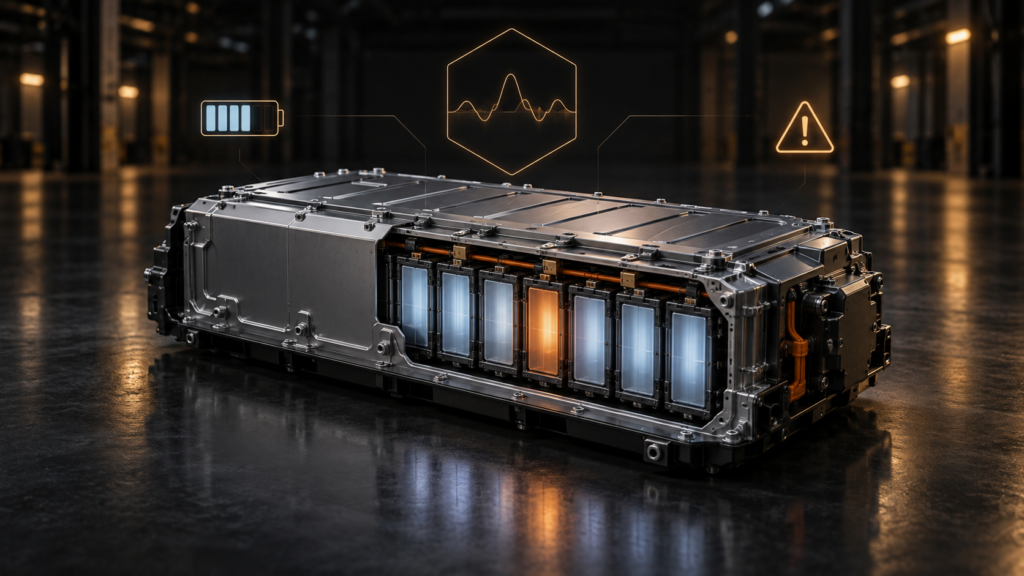
Why Visual Inspection Alone Is Not Enough
A clean case and correct label help with identification, but only voltage testing adds measurable electrical evidence before dispatch.
For workshops, distributors, importers, and fleet buyers, the stronger process is simple: visual review identifies the unit, while voltage testing supports the condition decision before shipment.
How does testing reduce problems for workshops?
Testing helps workshops receive stock that has already passed through an electrical screening step. This can reduce time spent dealing with units that should have been reviewed before dispatch.
Workshop time is valuable. Technicians need the right part available when a vehicle enters a service bay. If incoming stock has unclear condition, staff may need to delay work while they verify the product or contact the supplier.
A pre-shipment process cannot replace the workshop’s own checks. It can, however, improve the starting point. The workshop receives a unit that has been identified, visually inspected, voltage-tested, and prepared against a stated request.
This is especially useful for repeat purchasing. Workshops often need a steady flow of stock for high-demand models rather than a one-time retail purchase. A consistent process makes it easier to compare orders, plan inventory, and communicate requirements.
For more detail on this commercial cycle, the guide to used hybrid battery supply for repeat orders explains why dependable access matters for business buyers.
Can testing reduce installation delays?
It can reduce delays linked to obvious pre-dispatch condition concerns. It cannot prevent every vehicle-side or installation issue.
The supplier controls sourcing, checking, storage, order matching, and shipment preparation. The workshop controls vehicle diagnosis and installation. Clear responsibilities help both parties avoid unrealistic expectations.
Good hybrid battery diagnostics at workshop level may still be needed to assess the vehicle as a whole. The replacement unit is one part of a wider system, so technicians should not assume that every vehicle fault begins and ends with the battery.
Why do distributors need consistent testing across bulk stock?
Distributors need repeatable checks because they may receive, store, and resell several units at once. A clear process makes the stock easier to manage and explain to trade customers.
Bulk procurement changes the level of risk. Product condition, model mix, quantities, storage plans, and receiving schedules all matter. If checks vary without explanation, purchasing teams may struggle to assess what they are receiving.
Consistency does not mean that every used unit has an identical history. It means that each item moves through the same defined inspection stages. This gives the distributor a common basis for stock acceptance and internal records.
Testing the battery cells and related electrical condition points can also help the supplier decide which stock is suitable for order preparation. The buyer gains confidence from the process rather than from vague claims about used inventory.
What should distributors ask a supplier before ordering?
They should ask how stock is sourced, inspected, voltage-tested, stored, and matched to the order. They should also confirm collection or shipping arrangements before payment.
| Buyer question | Reason for asking | Useful answer format |
|---|---|---|
| Where was the stock sourced? | Clarifies the supply route | A direct description of sourcing channels |
| Was each unit checked before dispatch? | Confirms the presence of a defined process | A clear list of inspection stages |
| What order details are required? | Helps prevent application errors | Model, generation, quantity, and voltage requirement |
| Can availability be confirmed first? | Supports purchasing and customer planning | Stock confirmation followed by a quotation |
| What happens if the requested stock is unavailable? | Prepares the buyer for supply changes | Suitable alternatives presented before approval |
| Is pickup or international shipping available? | Supports transport planning | Warehouse collection or shipment after payment confirmation |
How should buyers read and use voltage results?
Buyers should use voltage results as one part of the condition record, not as a stand-alone guarantee. The reading becomes more useful when tied to the correct unit, test stage, and order details.
A number without product identity offers little procurement value. Commercial teams should know which item was checked and whether the result formed part of the supplier’s dispatch decision.
It is also sensible to ask when the check took place. A pre-shipment reading is most relevant when completed as part of final order preparation. If stock remains in storage, the supplier’s handling and review process still matters.
The Idaho National Laboratory digital report provides technical context for voltage testing before shipment. Such research supports the wider principle that measurement and documented review are important when battery condition must be assessed before transport or use.
Buyers do not need to turn every purchase into a laboratory project. They do need clear answers. Ask what was measured, what inspection took place, and how the supplier decides whether a unit is fit to dispatch.
How does the Hybrid Hive supply process use testing?
Hybrid Hive uses voltage testing within a broader sourcing and inspection process for business-ready inventory. The aim is to give trade buyers clearer stock information before collection or shipment.
The company sources used units through trusted partners in Japan, including dismantlers and dealership-related or certified supply channels. Stock often comes from low-mileage vehicles. It then enters the UAE supply network, where units receive dual inspection, voltage testing, and condition checks.
Inventory is stored in Sharjah for warehouse pickup or international shipment. The process is designed for parts distributors, automotive workshops, importers, resellers, and fleet maintenance teams rather than casual retail demand.
Buyers begin by submitting the vehicle model, generation, quantity, and voltage requirement. Hybrid Hive checks availability, prepares a transparent quotation, and may suggest another suitable choice if the requested item is not available. After payment confirmation, the order can be prepared for collection or shipment.
This operating model supports high-demand applications such as Toyota Prius, Toyota Aqua or Yaris, Toyota Camry, and Lexus RX Hybrid, with availability for other models. Buyers tracking model movement can also review the article on why Prius battery stock remains in high demand.
What does dependable testing mean for repeat orders?
Dependable testing gives repeat buyers a familiar quality step across different orders. It supports continuity when workshops, resellers, and fleet teams need stock on a regular basis.
Hybrid Hive reports more than 140,000 batteries supplied or processed and more than 300 bulk orders supported. The company also presents a 4.9 positive review signal. These points indicate experience with commercial supply volume, while the testing process gives buyers a practical reason to return.
Repeat-order confidence comes from clear actions: confirm availability, match the application, inspect the product, perform the electrical check, issue the quotation, and prepare the approved order. Each stage reduces uncertainty.
Used supply also supports the practical reuse of automotive components. This allows performance and sustainability to work together, provided that condition checks remain central. Reuse without assessment creates uncertainty. Reuse supported by inspection and testing gives businesses a more informed purchasing route.
Companies that need tested automotive batteries can use the wholesale service page to review the available supply route and submit their model, quantity, generation, and voltage needs.
Summary
Voltage testing is a vital pre-shipment step because it adds measurable electrical information to the physical inspection of a used hybrid battery. It cannot promise future lifespan or replace complete vehicle diagnosis, but it can help suppliers screen stock, support dispatch decisions, and communicate condition more clearly.
For workshops and distributors, the commercial gains are practical: fewer avoidable surprises, clearer purchasing records, better order matching, and less time spent resolving concerns that could have been found before shipment. Hybrid Hive supports this need through Japan-sourced stock, dual inspection, voltage checks, large UAE inventory, and an organized quotation, pickup, and shipping process for B2B buyers.
Frequently Asked Questions
Find answers to common questions about our hybrid battery supply, ordering process, and delivery options.
No. Voltage testing records electrical condition at the time of the check. Future service life can also depend on the unit's history, the vehicle, installation, use, and maintenance.
A workshop may carry out its own checks as part of vehicle diagnosis and installation. Pre-shipment testing supports procurement confidence, while workshop testing assesses the product within the vehicle and repair task.
The buyer should provide the vehicle model, generation, required quantity, and voltage requirement. Clear information helps the supplier identify suitable stock and prepare an accurate quotation.
Hybrid Hive states that batteries can be tested at the warehouse. Business buyers should discuss their model, quantity, and visit needs with the team before arranging collection.
Yes. Hybrid Hive supports warehouse pickup in the UAE and international shipment after payment confirmation. Availability, order details, quotation terms, and shipping arrangements should be confirmed before dispatch.